
Tuesday, 22 September 2015
Finalist in Blue mountains business awards 2015
Once again Angophora consulting arborist has become a finalist in the Blue Mountains Business awards for the 3rd Year in a row.
In 2013 Angophora Consulting Arborist became a finalist in the Business services category in 2014 Angophora Consulting arborist became a finalist in two categories in Excellence in Innovation and Excellence in Business Ethics and also awarded the judges Encouragement Award at the finalist presentation.
This year again they have been named as a finalist in Excellence in Business Ethics with the winners to be announced on the 23rd October 2015 at a Black Tie dinner at the Fairmont resort Leura.
Angophora Consulting Arborist by becoming a finalist for the past three years demonstrate that they are a company with high Business Ethics and a company who puts their clients their employees the community and the environment in high regard.
When you contact Angophora Consulting Arborist Frederick (Fred) janes and his team for your project you know you are dealing with a professional team.
For a full list of finalist see list at
http://www.bmchamber.org.au/news.asp?pid=285&nlid=136&pv=1&ID=876#n876


Sunday, 13 September 2015
Trees Spring time to fertilize
With the weather warming up the trees/plants etc. are starting to flower with new leaves also appearing now is the time to prepare our trees for the growing season Spring with goal of enhancing the vitality, beauty and function of our trees through fertization. The introduction of different types and formulations of fertization has grown Immensity (Pun intended)
Add to this the wide variation of soil types and disturbed soils from one back yard to the next, the range of weather conditions from the coast to the Upper Mountains. Now add the wide range of tree species from our native gums trees; Rainforest trees to introduced exotic trees, and fruit trees, each having somewhat different problems and nutrient needs.
Each tree species have a preferred soil pH and soil type that allows them to effectively uptake the nutrients that they need, this is called effective cation exchange capacity (eCEC)
Products such as SeaSol are not fertilisers and if used should only be used for new plantings or when transplanting as they are only to enhance root growth.
Tips when considering fertilizing your trees and Plants: if the leaves are discoloured, yellowing, they may be deficient in one type of Mineral Plants. The Citrus group leaves yellow when deficient in Iron and may need to have Chelated Iron added as well as a combined fertilizer.
To best determine the needs of your trees please contact Fred Janes, arborist at Angophora Consulting Arborist who is a level 5 Arborist. Up to date with the latest techniques and can conduct a soil pH test to determine what fertizer is best for your trees.


Sunday, 6 September 2015
DA applications Tree Impact Statements
Over the past couple of months many Councils have started requesting Tree Impact Statements or Construction Impacts Statements on trees. Trees that are situated on Residential sites, Industrial areas or new sun divisions.
DA Development applications and Trees: when many people are submitting a Development application (DA) most consider building plans, site survey and maybe a Landscape plan. Many builders, architect owners forget about their trees.
If you’re new construction is going to impact on any trees roots root zone either on your property a Neighbouring property including council nature strip you will be required to submit an Arboricutural report prepared by a AQF level 5 Arborist.
The development as proposed appears to impact on the root zone of a large canopy tree. Where trees are located within 5 metres of the proposed works, a report from
a qualified AQF5 arborist is required which assesses all trees and determines their
health, condition and Safe Useful Life Expectancy and specifies tree protection measures where applicable. Reference should be made to retention and management of vegetation provisions in Clause 53 of LEP 2005.” (BMCC)
The Arborist/Tree report for DA will need to look at the tree Species its health and structural condition, its age, its dimensions the trees Safe useful Life expectancy (S.U.L.E) and the Tree Protection Zones (TPZ).
The TPZ should be based on the Australian Standard Protection of Trees on Development sites AS 4970-2009. This standard describes the best practice for the planning and protection of trees on development sites. This is based on plant/tree biology and current best practices.
Fred Janes AQF level 5 at angophora Consulting Arborist has assisted many Architect builders and home owners in developing a Tree Management Plan for their construction sites. From a standard Residential site to large arrearage development areas for Industrial, Schools and small sun divisions.
For any or more information please contact me by phone 0418 966 488, e-mail info@angophoraarborsit.com.au or leave or leave a message on face book and I will contact you (If you do contact by Facebook please leave a Phone number and best time to call).


Thursday, 13 August 2015
Trees mulching
Today I heard the magpies singing their mating song, heralding the start of spring. Now is the time to start thinking about our gardens, especially our trees and how they are growing.
Most people consider fertilising their plants and shrubs, some people even consider fertilizing our trees. However, many places are still having cold mornings and nights, with the days not yet warm, so this could be a bit premature. We should wait till we get some warm days and hopefully a bit of spring rain.
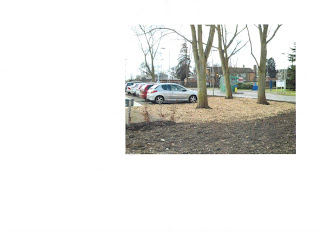
Now is the time to consider mulching our gardens. Around our trees is a guide, as it’s good to mulch to the edge of the canopy (drip line). Mulch should be 50mm to 75mm in depth, deep enough restrict weeds growing, but still allowing the air to penetrate into the soil and roots, which the trees need to live.
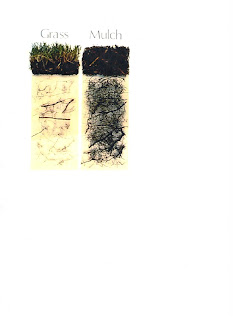
Recently there has been much research into the benefits of mulch. It is one of the simplest systems of promoting tree vitality and managing soil borne diseases. Users of mulch need to avoid chips with fabric, grass, using matting, fine woods, and diseased chips (Verticillium, Armillaria). I recommend only buying chips from certified sellers.
The discovery that mulches are useful in suppressing specific soil borne diseases was made about 40 years ago. Many ornamental trees produce roots in mulch layers because the interface of mulch and soil is the zone where diseases are suppressed. It is also an area of high biological activity, increased diversity of fungal organisms, and increased enzyme activity. In addition trees contain a range of medicinal chemicals and compounds that leach into the soil when mulched. Many of these chemicals have been shown to suppress soil borne diseases.
Research conducted recently has proven that using mulch from a specific tree can be very beneficial. For example, mulch from a willow tree can be effective in controlling Phytophthora root rot.
In Australia, it is very hard and expensive to get mulch from a single tree species from outside Australia (Exotic trees) but 1 of the best type of mulch is from Eucalyptus species. Our very own gum trees.
One caution when using mulch; it has to be seasoned if used when still fresh. It can burn and damage trees and should never be placed onto the trunk. But it’s okay when a gap of approximately 50mm is left around the trunk.
If you have a tree under stress best contact Fred Janes at Angophora Consulting Arborist is a level 5 arborist (AQF level 5) as soon as possible the longer you wait the worst the tree will be.


Saturday, 25 July 2015
Angophora Supporting the community
Angophora Consulting Arborist is a small local Business who proudly supports the local community thorough financial support and also as an active member with The Rural fire Service and also Lawson Combined Services Social Club.
Frederick Janes Owner of Angophora Consulting Arborist has been a member of the Rural Fire service since 1979 During Frederick time with Bullaburra bush Fire brigade (later rural fire brigade) he was a deputy for many of those years, Brigade training officer, OH&S officer and first aid officer. During this time he also attended many emergency calls, for bush fires, search and rescues, and storm damage and also attended many out of area incidents around the state, bush fires, Floods and hail/storm damaged.
In March 1994 Frederick joined the Blue mountains Chainsaw team as a trainer/instructor and assesses for cross cut (TFT) Simple tree fell (TFI) till 2009 when he became the chainsaw Training coordinator for Blue mountains District a position he hold till present
Angophora Consulting Arborist has also supported some sporting clubs Hazelbrook Football Club. Lower Mountains junior Football club and this year helped a local girl Jacklyn Chalker joinery to Denmark, as part of the Wagana Aboriginal Dancers group they performed at the Copenhagen for the 13th world Congress of dance and the child International under the direction of Jo Clancy Representing Australia.
Frederick is also a member of the Lawson Combines Services and is also a committee member helping to raise funds and organize the ANZAC day services and marches.
In 1989, when the Lawson RSL sub-branch closed, a group of three dedicated former service people (one army, one air force and one navy) vowed to keep the ANZAC Day spirit going in Lawson.
For over 20 years now, a small band of volunteers have raised money via meat raffles, at the Blue Mountain Hotel, Lawson, on Saturday lunchtimes and through local donations, to keep the event going.
The final cost to the club for ANZAC Day 2012 is expected to be well in excess of $10,000.
What does organisation do and who are its key members?
The Lawson Services Club has around two dozen members with ten of them voted onto a committee responsible for conducting the raffles and the set up and operation of the ANZAC Day celebrations in Lawson.
How does it connect with the Lawson community?
Lawson’s ANZAC Day is regarded by many as the biggest and the best in the Blue Mountains and is growing in size each year. 2011 saw around 400 people at the dawn service and more than 1,000 at the 11am service.
What benefits will the project bring to the Lawson community in general?
ANZAC Day has been special in Lawson for many years and is seen by most of the community as the township’s highlight of the year. It is an integral part of the Lawson community and brings together families and people of all ages in remembrance.
What benefits will be provided to a sponsoring group or organisation?
At the 11am service on ANZAC Day all sponsors receive a mention of gratitude and posters in the hotel list all sponsors.
The Lawson community appreciates the opportunity to attend the ANZAC Day services and celebration in its own township. Therefore, the goodwill generated by sponsorship of this event cannot be overestimated.
I have recently become aware of a hospital in Myanmar (Burma) that was in need of support. I am happy to add my support to this project. The village is called Thabyu village, Kawa township, Yangon division.


Saturday, 4 July 2015
Tree Planting
Many times I am asked to assess trees that have been planted 10 to 15 years ago and are now showing signs of stress, from poor form, large amount of dead wood, Tip die back (Top of trees are dead) and even at times 1 side of the tree is dead. These trees compared to good healthy trees are not as vigorous and have not grown as much as the healthy trees stunted.
After inspecting these trees a large portion of these trees problems have been determined to when they were planted and more importantly how they were planted and treated care for in the first two years of their life in the ground.
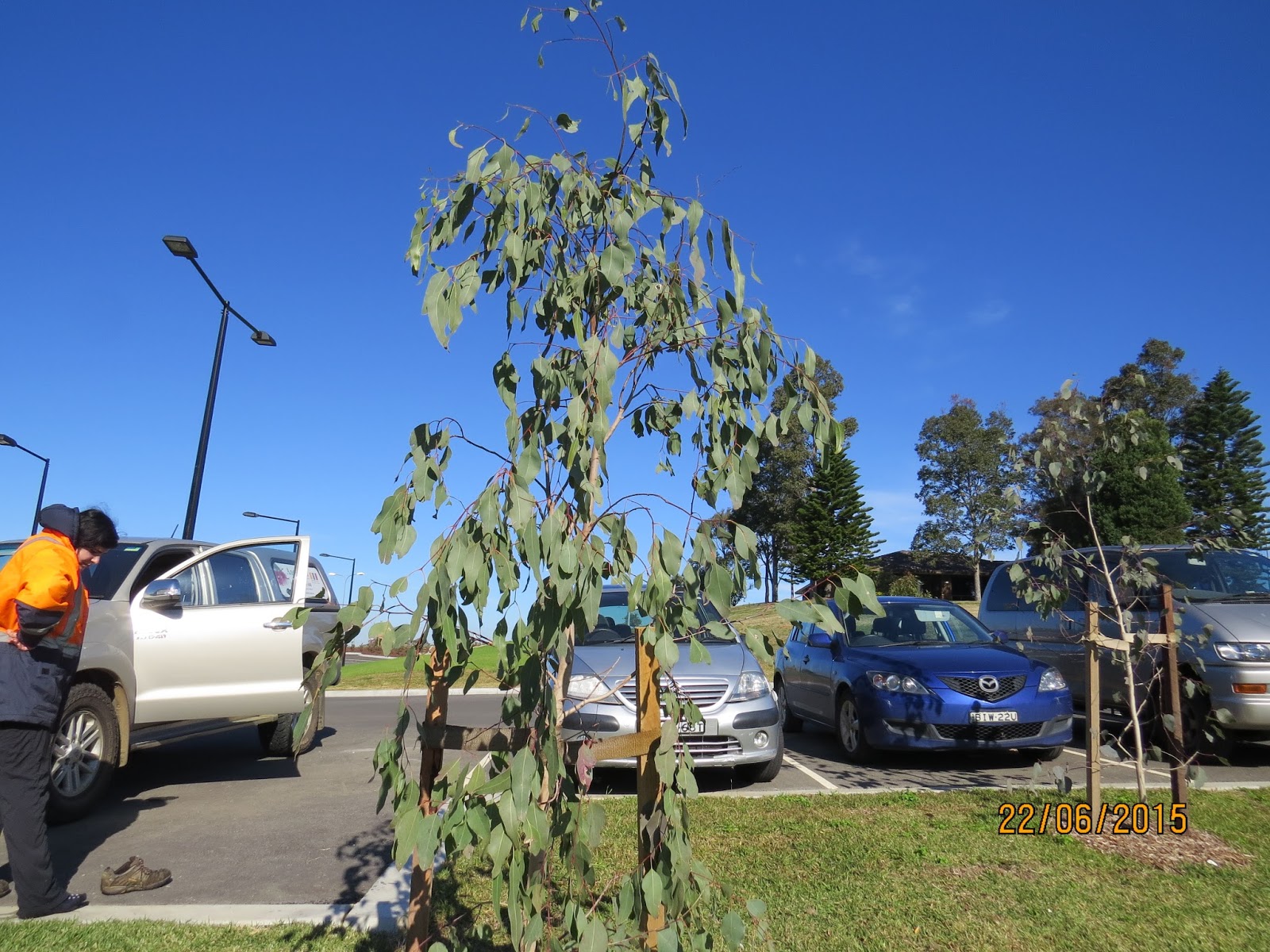
Many problems arise from trees as saplings been planted incorrectly mainly too deep and also bracing of the trees and how this is done.
If you are planting 1 tree worth $40 or $50 or landscaping a large area worth $30,000 or $40,000 or more it is important for the survival of the trees so it can live its full life to be correctly planted. (See photos of poor planted stunted trees in a park area)
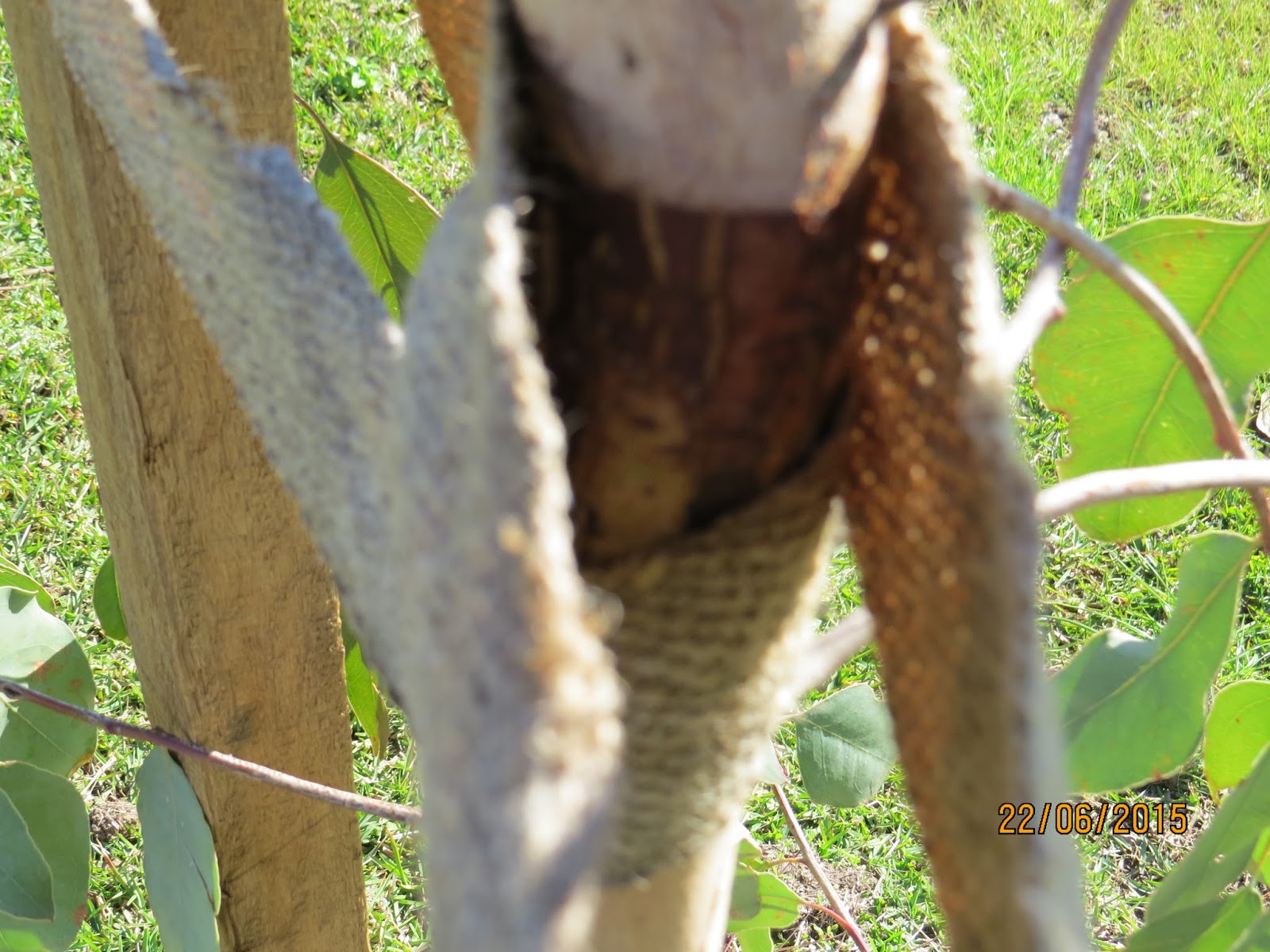
Trees should not be braced when planted and if they are for no more than 3 months and if you decide to brace the tree it should be done in a figure 8 so the tree/sapling can still move this helps the tree develop roots to support it self if it is supported so it dies not move the tree will decide it does not need roots to support it self and use the energy into growth. Recently I have notice that many new plantings are using a webbing to support the tree this webbing is damaging the trees bark and in some cases ring barking/killing the tree (See Photo) This method should be avoided and not used.
When planting 1 tree or landscaping a large area for correct information and advice contact Fred Janes at Angophora Consulting Arborist is a level 5 arborist (AQF level 5) who has an experience team who can help so that your tree/s will live a long healthy life.




Monday, 15 June 2015
Trees and the Urban environment
During the recent National conference I attended a session by Dr May carter on the benefits of Urban forest the positive links between contact with nature and health. Setting that support good health and quality of life are a fundamental component of sustainable cities.
Even while the importance of green environment within urban settings is gaining acceptance professionals working in the urban planning and design face substantial challengers in achieving desired ecological, social, economic and political outcomes. Current planning strategies across Australia planning legislation practices and process often contain retention of natural systems and incorporation of green Infrastructure (Western Sydney for example)
What needs to be done is to initiate change within the community attitudes and promote a new paradigm of city planning and design that value urban nature and supports biodiversity conservation and retention of tree canopy.
These benefits include Health, Shading cooling of the Urban environment walk under a tree on a hot day and experience the coolness compared to under the sun with no shade. Economical through less damaged to Infrastructure during heavy rainstorms from storm water.
To do this issues need to be addressed such as people’s attitudes or perceptions large trees are dangerous, lack of knowledge, lack of space, no time no money, reluctance to sweep leaves or worried about plumbing..
If people better understood the benefits of urban forestry they may be more willing to grow trees.


Subscribe to:
Posts (Atom)