Tuesday, 30 August 2016

Tree pest of Gum trees

How healthy are your trees is your trees showing signs of stress are they been attached by a pest/insect. Some tree Pest such as below can damaged and kill your trees if not treated. Thaumastocoris peregrinus, Winter Bronzing Bug is a pest of narrow leafed Eucalytpus trees. It is a cytosol feeder of tree leaves, which means it feeds on the inside material of the tree’s leaves. The symptoms of insect attack are that the tree leaves turn a bronze colour. This tree insect pest can be part of the cause of decline in the tree health of Eucalytpus scoparia a tree in the Sydney basin. Hymenoptera Perga dorsalis, Sawfly larvae If you're out in the bush or a local park during winter, you're likely to happen across a group of 'spitfires' clinging to the branch of a gum tree in the cold. These insects are technically called sawflies, a group of insects closely related to wasps. There are more than 200 species of sawfly in Australia, but the local species is the Steel Blue Sawfly (Perga dorsalis). The name 'sawfly' derives from a 'sawbench' under the abdomen of the female with which she lays eggs. Female wasps, in contrast, use a pointed ovipositor to lay eggs and in some species this doubles as a sting – adult sawflies do not sting and both adults and larvae are completely harmless. Female sawflies use the sawbench to cut the upper surface of a tree leaf and deposit 60-70 eggs into the leaf tissue. The larvae hatch and feed on gum leaves, grouping together for protection in a rosette pattern, similar to the head-outwards stance adopted by Bison when under attack. This is known as a 'ring defence', or cycloalexy. As the larvae grow, they collect in larger groups around branches during the day and spread out to feed at night. Like their cousins, the ants, bees and wasps, sawflies show some social behaviour but only in a primitive way. When feeding at night, larvae tap the branch to keep in constant communication with each other. If an individual becomes lost, it will tap more rapidly until it receives an answer from the rest of the group – if an individual becomes completely separated it will not survive long on its own. The activities of a group of sawfly larvae are governed by a few select individuals that become in effect the leaders of the group. They lead the rest out to feed at night and, if they run out of food, lead the group across the ground to other trees. When large numbers of sawfly larvae are present they are able to defoliate small gum trees, but in general are not a major pest. When ready to pupate, the larvae leave the host tree and burrow down to make mass cocoons in the soil. Here they sit through spring and summer to emerge in early autumn. Adults have no mouthparts and do not feed, living only for a week or so. Not all emerge, however, as many succumb to parasitic flies. These flies, about the size of a blowfly, will lay eggs in the sawfly larvae and the fly maggot literally eats its host from the inside out, eventually emerging from the sawfly's cocoon. . Sawfly larvae have an unusual defensive mechanism that has given them the name 'spitfires'. They store eucalyptus oil in a small sac in their gut, and regurgitate this oil when under threat. Despite their nickname, they are unable to actually spit this fluid and the oil itself is harmless unless eaten (like all eucalyptus oil). In fact it has a very pleasant eucalytpusy smell. Australia is one of the main strongholds of Symphyta, the suborder of insects to which sawflies belong. The Steel Blue Sawfly is one of the few insect species active in Victoria abd NSW during winter, so next time you're in the bush take the time to stop and smell the sawflies. References: Museum Victoria 2012 https://museumvictoria.com.au/about/mv-blog/.../bug-of-the-month-steel-blue-sawfly/ If you are concerned about your trees’ health please contact an Arborist such as Fred Janes at Angophora Consulting Arborist. A level 5 arborist (AQF level 5), qualified in the latest techniques using the International Arborist Associations’ Tree risk Assessments Qualifications (TRAQ). Fred and his team can provide professional advice on how to mitigate the risk and allay any fears that you may have.

Tuesday, 2 August 2016

Trees and developments

DA Development Applications and Trees: when many people are submitting a Development Application (DA) most consider building plans, site survey and maybe a Landscape plan. Many builders, architect owners forget about their trees and trees in neighbouring properties. If you’re new construction is going to impact on any trees roots root zone either on your property a Neighbouring property including council nature strip you will be required to submit an Arboricutural report/Tree Impact statement prepared by a AQF level 5 Arborist. The development as proposed appears to impact on the root zone of a large canopy tree. Where trees are located within 5 metres of the proposed works, a report from a qualified AQF5 arborist is required which assesses all trees and determines their health, condition and Safe Useful Life Expectancy and specifies tree protection measures where applicable. Reference should be made to retention and management of vegetation provisions in Clause 53 of LEP 2005.” (BMCC) The Arborist/Tree report for Development Application, DA will need to look at the tree Species its health and structural condition, its age, its dimensions the trees Safe Useful Life Expectancy (S.U.L.E) and the Tree Protection Zones (TPZ). The TPZ should be based on the Australian Standard Protection of Trees on Development sites AS 4970-2009. This standard describes the best practice for the planning and protection of trees on development sites. This is based on plant/tree biology and current best practices. Fred Janes AQF level 5 at angophora Consulting Arborist has assisted many Architect builders and home owners in developing a Tree Management Plan for their construction sites. For any or more information please contact me by phone 0418 966 488, e-mail info@angophoraarborist.com.au or leave or leave a message on face book or web page and I will contact you (If you do contact by Facebook or webpage please leave a Phone number and best time to call).

Thursday, 26 May 2016

Development applications (DA) consent and trees

Before buying a property to live in or to develop etc make sure you get a Consulting arborist to advise you on what trees Council will and won't let you take out, I've recently had to tell a few clients it's not a given you will get permission off Council to remove trees, they will make you redesign etc Today in some Councils we are dealing with officers who will fight tooth and nail to keep any tree no matter how bad the condition or what damage it is causing, all appropriate tree management theory and practically is thrown out the door with these very green politically motivated officers who take their politics to work I've had clients who had to expend great amounts or lose money having to resell properties because of the above I'm a great believer in the right tree in the right spot and that trees do outlive or outgrow sites were removal and replacement with more suitable species is the better way to grow and considered appropriate tree management The urban environment is a planned environment and therefore tree planting and maintenance has to be well designed , planned and managed to be a success in such an environment Trying to put a forest environment into a urban environment without the above is recipe for disaster

Thursday, 14 April 2016

Tree health

Good day the past 3 days have been enjoyable as I have been attending 5 practical for the first semester on Biology as part of the environmental management degree. This will help in gaining more knowledge to better diagnose tree health for our clients.

Saturday, 26 March 2016

Advanced or Level 3 Tree Risk assessment aerial or Piuc Sonic Tomography

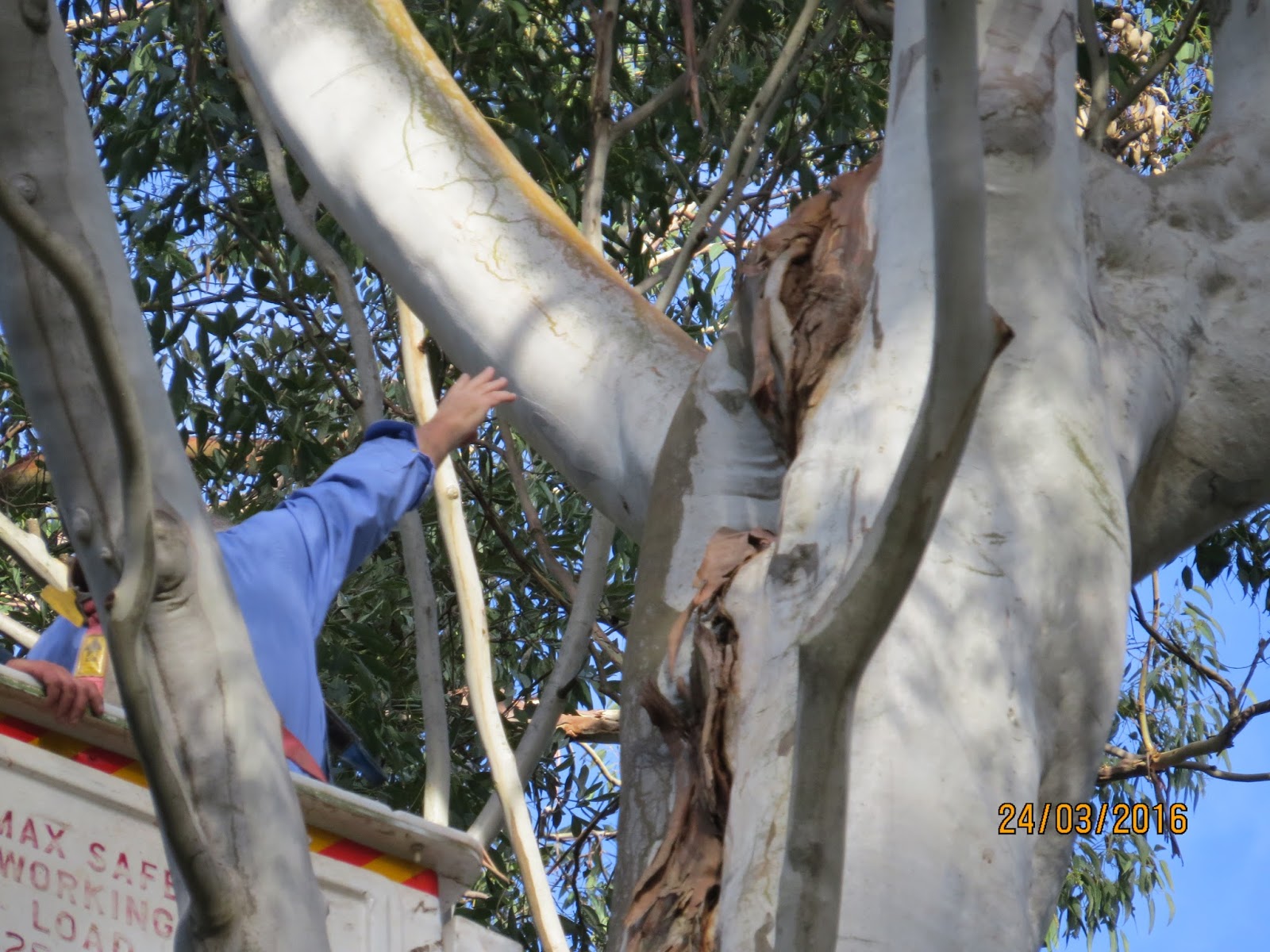
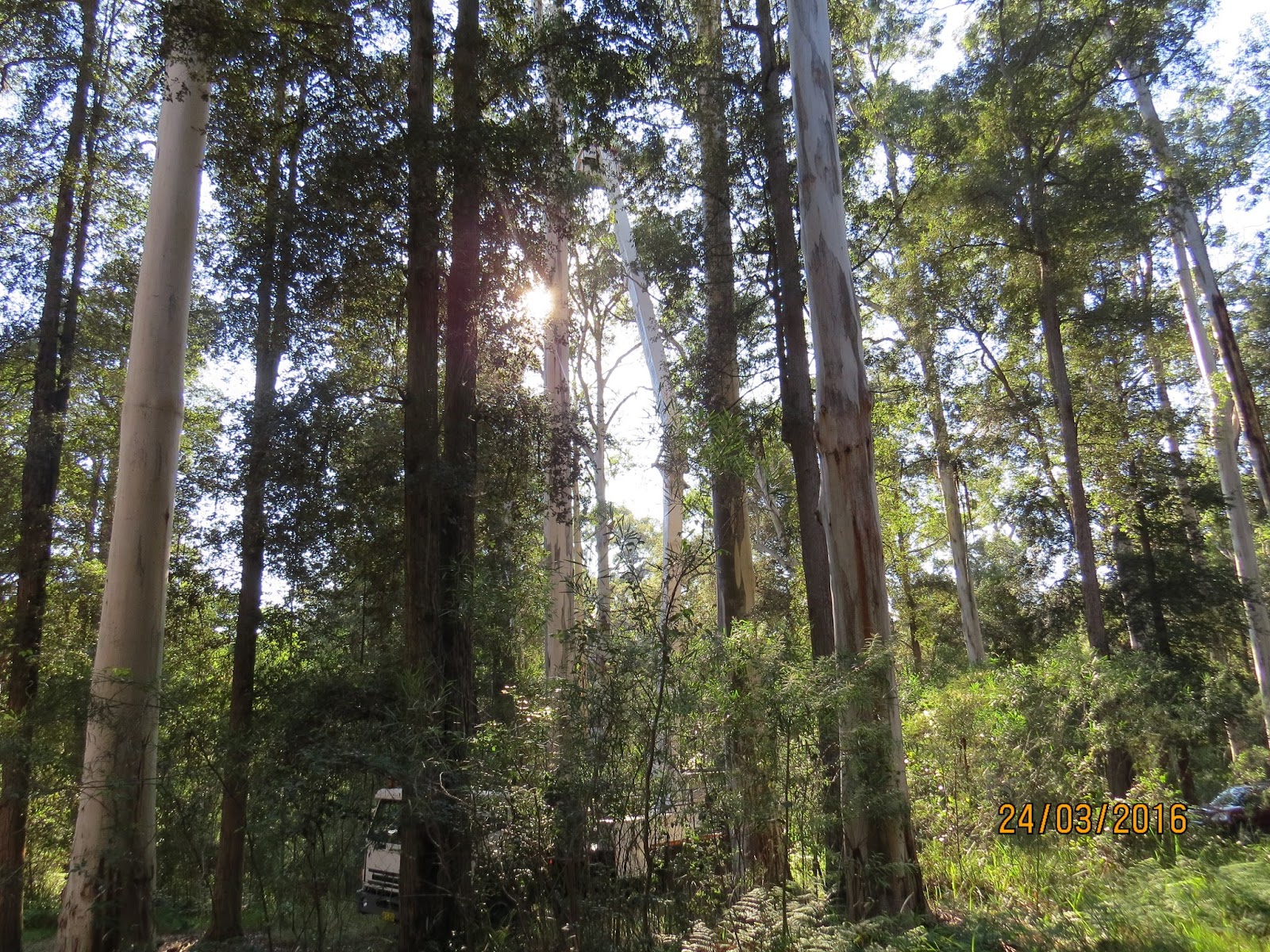
When we are contracted to assess trees most people want a Level 2 Tree risk/hazard assessment this assessment is done from the ground and we visibly assess each tree for their health and more importantly their structure. This is done using our eyes and our Knowledge and experience looking for potential and obvious defects, we also use a steel probe (safer than hands and arms) so we can determine how much if any decay is present and also how deep the cavity may be. We also conduct a percussion test using a rubber mallet to Sound the tree to determine if the tree is hollow or solid. But what we do not have x-ray eyes so cannot see for the trunk or can we see defect’s up high in the tree and many times we recommend an Advanced assessment or Level 3 this could be an aerial assessment of the scaffold upper branch junctions, damaged along the trunk or the tree assessed may need to have the trunk assessed by a Picus Sonic Tomography to determine the amount of solid timber to decayed or hollow sections unable to be seen visibly and or a soil or tissue test to determine the course of the trees ill health. On most occasions clients decide not to do these tests as the cost is to high yes there is extra expense for these advanced assessments but what is the cost if you don’t do these test and the trees fails and causes damage or worst kills someone. Recently I conducted an Aerial inspection using a 24 meter Elevated Work Platform (EWP) to assess 2 trees both from the ground raised a concern the second tree defect was superficial all was good but the first on inspection had a large Hollow 600mm deep with at this section a Diameter of 700mm leaving a wall thickness off 100mm As this was a hollow used by birds we did some weight reduction and left the trunk as a habitat leaving the tree safe but also able to continue functioning Another client rang me up and asked if I can come an assess a tree that I had assessed 10 months ago and recommended a advanced assessment as this tree had a branch fail damaging a roof of 1 of their buildings and they were lucky that no one was using the path below when the branch failed. The cost of replacing the damaged roof and then now have to remove the tree loosing valuable shade and then replacing that tree is a far more expensive than hiring an Elevated work platform EWP (cherry picker) and myself for 2 hours when the defect could have been identified the limb removed. International Society of Arboriculture (ISA) Tree Risk Assessment Qualification (TRAQ) recommends different levels of assessment from a walk/drive by a visible tree assessment and advanced assessment. When you are a manager/owner of an amenity tree it is your duty to maintain this tree and minimise risk that it poses to you your family, your home or buildings. To determine the structural integrity of the tree advanced assessments may need to occur, such as an aerial assessment with an Arborist using a Elevated work platform (EWP a.k.a. cherry pickers) or a Picus Sonic tomography, to sound the tree. For any or more information please contact me by phone, e-mail or leave a message on face book and I will contact you (If you do contact by Facebook please leave a Phone number and best time to call).

Wednesday, 9 March 2016

Tree Health

A tree’s health can be affected by many things mostly soil related issues or abiotic disorders such as water, too much or too little. I have, over the past couple of months, paid special attention to the weather, in particular the rain fall (I have recorded rainfall at my place since November 1993). December was dry until the 21st when we received lots of rain and as most will remember a very wet January, 127mm above the average and then February being very very dry ; only 35.5mm, that’s 174mm below average. That’s a short fall (Pun intended) of 47mm below average. With this we are having a very dry March with above Temperatures (hot and humid). We feel the heat and the humidity; some of us notice the rainfall. Overall, this affects us as we hopefully drink more water and can mostly take shelter from the heat. But what about our trees and plants are they coping or are they suffering from stress? Do the tree leaves look like they are weltering, are the new shoots brown or curling are they losing their leaves. These are all signs of the trees being unwell. During the hotter drier months trees can be put under stress, stress and ill health can be seen from the colour, density and size of the trees’ foliage. When we walk around our gardens and we see our trees’ foliage exhibiting any signs of deformity or loss contact Angophora Consulting Arborist for an efficient and accurate diagnosis of the problem/s. We can provide solutions to remedy the tree so it can be retained for many years as good healthy amenity trees providing many benefits such as shade during the hot weather. Trees and plants need to be watered. The water needs to be applied outside the hotter parts of the day, either early morning before 9am or late afternoon after 4pm. Water should be applied to the soil not the tree foliage. If you are concerned about your trees’ health please contact an Arborist such as Fred Janes at Angophora Consulting Arborist. A level 5 arborist (AQF level 5), qualified in the latest techniques using the International Arborist Associations’ Tree risk Assessments Qualifications (TRAQ). Fred can provide professional advice on how to mitigate the risk and allay any fears that you may have.

Thursday, 18 February 2016

Tree risk hazard hazard in national Parks

At times you can have a good day at work were the "office" is a beautiful place to be Today I started the annual tree risk hazard assessment for national parks and Wildlife assessing trees in the Lower Blue Mountains Wood ford to Glenbrook. The purpose is to assess dangerous trees or trees that have deadwood that may fall into camping areas or car parks endangering visitors and damaging vehicles. Sites visited today were Murphy's Glen assessing some beautiful old trees Blue gums and Syncarpia glomulifera, Turpentine (see photos). Then down to Glenbrook having a look at Red hands cave (first time for me nice example of Aboriginal rock "art") on way to the cave saw a nice 7 to 8 foot brown snake with a girth about 50 mm sorry no photos :) Then over to Mt Portal again a first great view over the Nepean a bit smoggy to see Sydney though. Then Eurokea camping area on way saw a mum and joey grey bush kangaroo. While here I assessed the scar trees and the trees are sealing over the old cuts made many years ago (See Photos) Then up to Blue pool car park and Jelly bean Pool car parks. I saw some beautiful Eucalyptus such as Eucalyptus punctata, Grey Gum, Angophora Floribunda, Rough Bark apple, Angophora Costata Smooth bark apple, Corymbia eximia, Yellow bloodwood Corymbia gummifera Red Blood woEucalyptus Deanei, Mountains Blue Gumod, Eucalyptus crebra, Narrow-leaved ironbark, Eucalyptus sclerophylla, Scribbly gum (blue Mts)Eucalyptus sideroxylon, Mugga, Red Ironbark or Mugga Ironbark just to name a few. We are so lucky to live in such a great area such as the Blue Mountains :) :) with such a large variety of trees :) :)